




Discussion on the Judgment of the Unity of Partial Designs
Author:Huanfang WU
Click:
Time:2024-06-19 09:33:30
With the implementation of the new "Guidelines for Patent Examination" and "Implementation Regulations of the Patent Law", more and more partial design applications have been granted. In this article, the author briefly discusses the issues that need to be considered in terms of unity when filing design applications.
I. Unity-related provisions
1. Article 31, paragraph 2 of the Patent Law stipulates that: An application for a design patent shall be limited to protect one design. Two or more similar designs for the same product, or two or more designs which are incorporated in products belonging to the same class and sold or used in sets, may be protected in one application.
2. The new "Guidelines for Patent Examination" stipulates that:
2.1 The designs involving one assembled product and its assemblies shall be considered as one design.
2.2 Designs for two or more portions of the same product which are not connected with each other can be considered as one design if they are related in function or design and form a specific visual effect, for example, the designs of the two temples of an eyeglass or the designs of the four corners of a mobile phone can be considered as one design.
2.3 Normally, through overall observation, if the basic design and other design(s) have the same or similar design features and the difference between them lies in slight changes, for example, in some fine details, usual design of this category of products, the repeated and continuous arrangement of a design unit, or only colour, such designs are generally considered as similar designs.
3. Determination of “same product”
The new “Guidelines for Patent Examination" stipulates that: According to the provisions of Article 31, paragraph 2 of the Patent Law, the various designs in one application should be the overall or partial designs of the same product.
Usually, when examining whether multiple partial designs meet the requirements for similar design applications, the examiner first determines whether they are the designs of the same product. For partial designs, both the overall and partial factors of the product need to be considered, that is, the overall product carrier on which the basic design and other design(s) rely should be the same product, and the portions claimed to be protected are the same one portion or have common part.
II. Case Studies
Below, the author uses several cases to briefly illustrate common situations involving judgments on unity.
1. If the overall design and partial design of the same product are similar, they can be protected in the same design application.
Before the new “Guidelines for Patent Examination" came into effect, the draft of “Guidelines for Patent Examination" stipulates that "the overall design of the same product and any of its partial designs cannot be protected in one application", but this provision was deleted from the new “Guidelines for Patent Examination" that was subsequently implemented. This means that as long as the overall design and partial design meet the requirements on similarity as mentioned above, they can be protected together in one design application, otherwise they need to be protected in different applications.
According to practical experience, if the portion to be protected in a partial design is the main body of the entire product, such partial design and the overall design can usually be allowed to be protected in one design application as similar designs.
For example, as for the following two designs for a portable test instrument, overall design 1 relates to the entire portable test instrument, and partial design 2 relates to the main body of the portable test instrument. The difference between the two designs is very slight. In this case, the above requirements on similarity are met. Accordingly, the applicant can protect the overall design and partial design together in one design application.
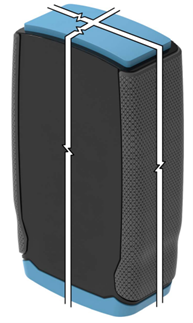
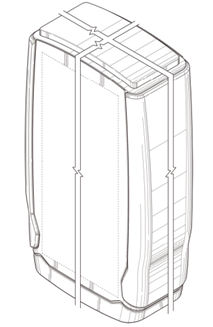
Perspective view of Design 1 Perspective view of Design 2
2. If the overall design and partial design of the same product are not similar, they cannot be protected in the same design application.

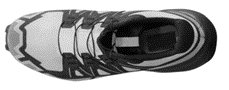
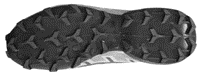
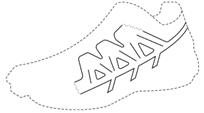
Views of Design 1
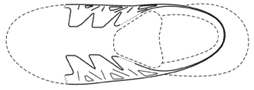
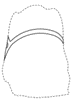
Views of Design 2
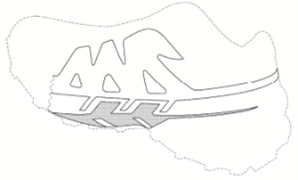
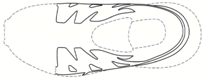
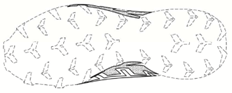
Views of Design 3
From the above Design 1, Design 2 and Design 3 for shoes provided by the applicant, it can be seen that, partial designs 2 and 3 only protect the decorative part on the upper, while overall design 1 protects the entire shoe and involves a lot of details. Therefore, there is no basis for similarity between overall design 1 and partial designs 2-3, which does not comply with the above provisions on unity and will inevitably result in a Notice of amendment.
Accordingly, the applicant can protect overall design 1 in one design application and partial designs 2-3 in other application(s). The filing strategy for partial designs 2 and 3 will be described below.
3. If the multiple designs for the same portion of a product are not similar, they cannot be protected in the same design application.
Whether the partial designs are similar or not is determined based on whether the partial designs of the portion claimed to be protected themselves are similar or not. The overall design is only used to determine the proportion and position of the portion in the overall product. And the principles and standards for determining the similarity between partial designs are basically the same as those for the overall design.
Therefore, for the two partial designs 2 and 3 mentioned in Item 2, they are not similar to each other, which does not comply with the provisions on unity and generally will result in a Notice of amendment.
Accordingly, the applicant can protect partial design 2 in one design application and partial design 3 in another design application.
4. Multiple designs for different portions of a product do not have a basis for similarity and cannot be protected in the same design application.
The applicant provides the partial design 1 for protecting the side parts of a portable test instrument and the partial design 2 for protecting the bottom part of the portable test instrument.
As mentioned above, multiple partial designs have a basis for similarity only when they protect the same portion of the same product. The partial design 1 protects the side parts of the portable tester, while the partial design 2 protects the bottom part of the portable tester. Therefore, the two partial designs do not protect the same portion of the same product and do not have a basis for similarity.
Accordingly, the applicant can protect partial design 1 in one design application and partial design 2 in another design application.
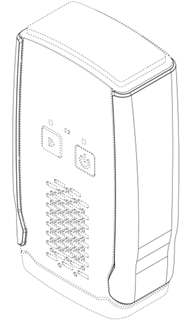
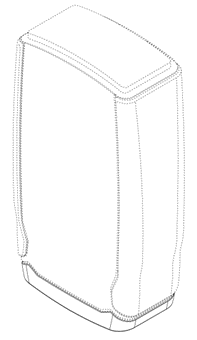
Perspective view of Design 1 Perspective view of Design 2
5. Designs for two or more portions of the same product which are not connected with each other but are related in function or design and form a specific visual effect can be considered as one design.
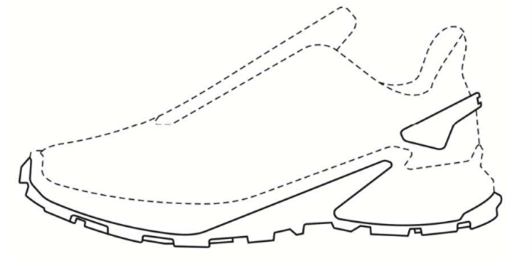
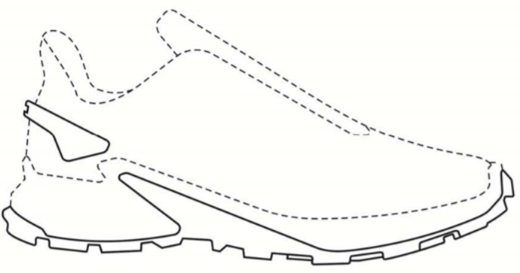
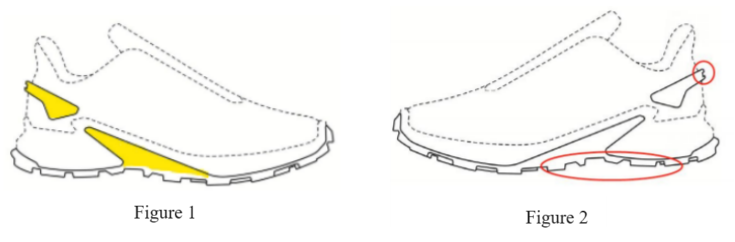
See the above figures, the partial designs are for two portions which are not connected, namely the sole and the decorative part on the heel. Although the sole and the decorative part on the heel are not connected, they belong to the same product "shoe", are related in design, and form a specific visual effect. Specifically, for the convenience of description, the figures are colored below. As shown in Figure 1 below, the two portions marked in yellow point to each other, their inclination angles are similar, and thus they echo each other; and as shown in Figure 2 below, the concave part of the decorative part on the heel marked with a red circle also echoes the concave part at the sole, thereby forming a specific visual effect, so the two parts are obviously related in design. In addition, the original design concept of the designer is to design the sole and the decorative part on the heel together in a mutually related and echoing manner to form a specific visual effect. If the two parts are protected in different applications, the designer's overall design concept cannot be reflected.
Accordingly, the applicant filed the two designs in one application, and after receiving a Notice of amendment, successfully persuaded the examiner based on the above reasons.
III. Conclusion
Although several actual cases are given above to illustrate the determination of unity of partial designs, in practice, in view of the fact that each design has its unique features and different examiners hold different examination criterions, if the applicant is uncertain about the unity issue before filing, the multiple designs can be filed in one design application first, and then be divided if necessary after receiving an objection of lacking the unity from the examiner.

点击右上角
分享给朋友吧







 Long by picture save/share
Contact Us
Address:Room 716, Gaode Tower, 10 Huayuan East Road, Haidian District, Beijing
Postcode:100083
Tel: 86-10-62966619
Website: www.ipmarch.cn
Email:mail@ipmarch.cn



点击右上角
分享给朋友吧
Contact Us
Address:Room 716, Gaode Building, 10 East Huayuan Road Haidian District, Beijing
Postcode:100083
Tel: 86-10-62966619
Website:www.ipmarch.cn
Email:mail@ipmarch.cn
